Thursday, 5 January 2023

Dawn Bush tells us all about her writing


I write short stories, flash fiction, songs, a little poetry, and have adapted several plays – I’m currently working on another. I think the common denominator in my writing must be that it has to be short! I have begun a novel several times, but rarely get past the first chapter. I get bored, and then my brain tells me that if I’m bored, how can I expect my readers to be entertained? Then I give up. I suppose the plays are quite long, at a couple of hours running time, but the point is I’m not responsible for the storyline of those. Someone with more staying power than me did that. I don’t write conventional romance, either, my love stories tend to be a little more pragmatic than the usual boy-meets-girl, and are often more to do with what happens after the honeymoon is over.

I have plans to crack that novel though. I want to write a Regency romance.

I first began writing at school. A teacher asked me to write a short story for a competition. He wasn’t my teacher personally, I was in a different class, but I was flattered so I did it. I don’t remember if I won, but I do remember he was really impressed with my work, and told me I could be a writer. I never forgot, mainly because he lent me a book of short stories that he impressed upon me I must return. I never did, and the guilt is still with me…! I don’t know that I gave up writing when I left school, but I spent years concentrating on acting, and it was only after I had children that I started to write again. My family and I were very involved in our local church, and I used to write little scenarios to illustrate the point of the sermon, or to help the children visualise Bible stories. A couple of times I wrote a five part serialised play for the holiday club we ran in the summer – one 20 minute episode per day for a week. I have no doubt producing and acting in those helped me hone my writing skills. I suppose those serials could be said to be my first adaptations, but I don’t count them. I didn’t call myself a writer at that point, and I wasn’t being paid except in kudos. Even that was in short supply – nobody really thought there was anything very clever about it. I remember one woman saying “oh yes, the jokes are quite funny, the children love them, but they’re all the same style, though, aren’t they?”  That was a bit of an eye-roll moment.
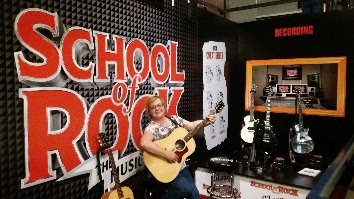


I was also asked to write a blog for a West End theatre fan group on Facebook. I did this for about a year or so. I enjoyed it very much, particularly researching the articles, which sometimes meant I had to go to the theatre. Such hardship! I wrote about dubbing, understudies, the Lloyd Webber phenomenon, star casting and various other subjects.  I found thinking of topics harder than the actual writing, and once again it was unpaid work; but so satisfying to produce.


There is very little routine in my writing. I write best to commission, or for a competition that has sparked my imagination. I rarely sit down and write out of discipline. Although I am a morning person rather than a night bird, I find I write best at night, I don’t really know why. Maybe because there is so little distraction. Writing is the only thing that makes me hyper-focus, it’s the only thing I do in which I don’t deal well with interruption. I love writing on the computer, it makes editing so easy, and I tend to edit as I go. I do really understand other writers who must have the feel of pen and paper, though. If I have writer’s block, I do that; or I’ll jot down ideas. I once took the advice of a magazine, and went to bed with a pen and paper on the bedside table, the idea being that when wonderful inspiration comes in the night  - random thoughts or dreams that are usually forgotten by the morning, no matter how firmly you tell yourself to remember them – all you need do is grasp the pen and jot it down. Great idea! For two or three nights running I half- woke with sparky plots in my head, but was just too tired to properly wake up and put the light on so I could write it down. The fourth time it happened, I forced myself to wake up. Eyes half closed, I wrote a paragraph of notes, switched off the light and thankfully fell asleep, convinced the plot of a wonderful novel was there on the paper.  When I looked at it in the morning, I had indeed written it – yes, I didn’t dream that – but I had absolutely no idea what the hieroglyphics on the page meant. It wasn’t even written using the English alphabet. Fascinating, but useless. I was really ticked off, after all that effort, too.

I’m proudest of two things. One is my prize-winning poem The Siege of Margaret White. I don’t write much poetry, and struggle with the different forms; but rhyming poetry has always come fairly easily to me - probably because I’m an amateur musician, so I find keeping to a rhythm comes naturally. However, I still look back on that poem and wonder how on earth I did it. Where did the idea come from? Where did I get her name? (I usually overthink names, but I distinctly remember Margaret Roberta White just fitting, straight away, as if she’d always been there.) She won first prize in a poetry competition for me. The brief was to write to the last line: “And so she wore her little black dress.” The judge advised people to read it out loud to get the best out of it. I have included it here, so you can see what you think. I perform this, every now and again.


The Siege of Margaret White.

Margaret Roberta White habitually wore trousers,

And hid her Upper Assets in ferocious well-cut blouses.

Her bosom swelled most richly; yet no cleavage was permitted

To peep out from her armoured bra. Its form was full yet fitted.

Though Meg was in her prime, came there no handsome knight to charm her

Indeed, though many tried, they found no spear could pierce her armour.

Men of courage toppled: young and old all took their chance

The flower of British manhood simply shrivelled at her glance.


But Maggie had a secret. In a private, hidden box

Within her ordered closet, lay a case with seven locks.

When Maggie was asleep its contents filled her faithless dreams

Though she suppress, she could not kill her own subconscious schemes.

There, deep within the shadows, lurked (awaiting her destruction)

A thing of lace and boning, dark with satin and seduction.

Margaret Roberta White, your starchy days are numbered

The hour is near when locks and box and you will all be plundered.


The flower of British manhood had retreated for a while

Maggie was off guard; content, she even tried to smile

Then one day in the coffee shop, one Marc Dupont from France

Whilst purchasing espresso, saw the gap and took his chance.

Her fate was sealed: the café full, she had to share a table

Unguardedly she looked into his brooding eyes of sable.

The jolt within her innards sent her latte frappé flying

And Marc cried out “please, let me ’elp, zose trousers now need drying.”


Assailed the mighty citadel! And crumbled now the tower!

A dinner date is made, and she agrees the day, the hour!

Bewildered by the onslaught, she retreats, her heart afire

Her virgin body burning with unrecognised desire.

Margaret Roberta White went straight home to the box

Unswerving she pulled out the case and broke the seven locks.

She had no choice: the latte had made such a dreadful mess

Of blouse and trousers both; and so she wore her little black dress.

© Dawn Bush.


The other proud moment was in completing my first stage adaptation of a novel. I had worked as an actor for a company, Dot Productions, on a couple of tours. Unless you’re part of the lucky few, acting leaves a person with a lot of down time; and the danger is that the lack of outlet for your creative muscles can lead to depression. During one particularly dry spell, it was my husband who nagged me to death, encouraging me every day to write a stage adaptation of a story. I feebly protested I couldn’t write plays, but he wouldn’t take no for an answer, and knowing how much I love Jane Austen, it was he who suggested adapting one of her books. As previously mentioned, I write best with a goal in mind, so I thought of Dot. I had seen that they were open to performing plays written by people they knew, so strongly encouraged by my husband, I shyly texted the producer one day and asked if he’d be interested in an adaptation of Sense and Sensibility.  He said yes straight away. Excellent, but that heightened my challenge. I had to write to very strict parameters. The play had to be for 5 actors and run less than 2 hours. It also had to be strong on action – which, as Jane Austen’s work is heavily character driven, meant making the most of what little dramatic action there was. Reading it through, I came across what was almost a throwaway line. Colonel Brandon meets the dastardly Willoughby in a duel.  “..we met by appointment, he to defend, I to punish his conduct. We returned unwounded and the meeting, therefore, never got abroad.” It’s easy to miss this line, coming as it does in the middle of Brandon’s story; but it was the hook I needed on which to hang the rest of the action. The play toured the UK and was taken to America for a couple of days as well. Despite the actor playing Brandon having his nose broken for real during one of the performances, it was very well received, particularly by the people at Stoneleigh Abbey, where Jane Austen stayed for a while. They were thrilled with it. It won’t bring me fame and fortune, and it’s unlikely to be produced again, but it remains something I am very proud of. My latest adaptation, Persuasion, is due to tour this summer, all being well, although I’m unlikely to be in it myself this time.


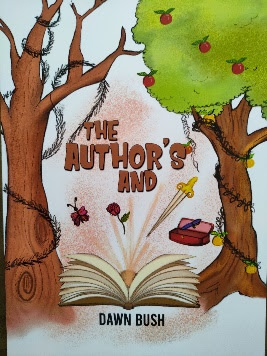
I’m very fortunate in that my immediate family are extremely encouraging, and proud of what I do. I wrote my first novella, a children’s allegory of the Gospel, when my two girls were quite young. They loved it, but as it’s very niche, I was only able to publish it recently, using a hybrid publisher. It’s called The Author’s And, and is available on Amazon.


Whenever I got something published, I would announce “Buns for tea, girls!” and they’d ask “Which story?” It became a little tradition. You might recognise it’s a phrase lifted from the Mother in The Railway Children. Both my children grew up to be voracious readers. My elder daughter, Becki, is now a commissioning editor for an independent publishing company, focusing on self-help and educational books.

The younger, Sophie Toms, is an actor and writer herself, she has an EP of her own songs, Light in the Dark, available on amazon and Spotify. She is an amazing lyricist. She and I have collaborated on writing a musical.


Even with all this variety, the medium I’m most comfortable in remains the short story. I love the economy of phrasing, forced by a restricted word count in many competitions. I love them to have a proper story arc, no matter how short – a beginning, a middle and an end that the reader might not see coming. I’ve even managed to win a prize for this using only 50 words! Writing a short story really feels like an art, a craft to me – modelling, shaping and reshaping like clay on a potter’s wheel. I have won competitions for stories I didn’t think were great, and failed to publish ones I love: but whatever the outcome, writing them is so very satisfying. My latest publication is a book of these stories. I don’t have a regular theme in my writing – I do comedy, tragedy, sci fi, historical and contemporary, much like the varied dishes at a banquet. So I called it “A Feast of Tales, Gently Twisted.”  It’s available from the publisher, Bridge House, here and on Amazon.


Monday, 2 January 2023

News 2 Janaury 2023

New Year'S Day, 2023, Sylvester 

Happy New Year

There’s still a lot to worry about but I hope you can all find some reason to be hopeful. I’ve noticed shoots from bulbs in the garden. Petrol and diesel have come down in price near us and our food bill has come down slightly. We’re grateful that we’re still able to enjoy good drama and literature.  

And I enjoy the way I sped the bulk of my time: reading, writing and editing. Even marketing and admin are rewarding.    


Current writing

I’m continuing with my new Peace Chid book. I’m also doing a lot of thinking about Schellberg book 7. This will be about Gabriela, the aunt of one of the girls featured in earlier books. Gabriela is a peripheral member of the German resistance.

I’ve only just realised that the Peace Child series and the Schellberg cycle are actually about similar issues. I’ll leave you to judge for yourselves how I’ve worked that out. Odd though: one is about a not so near future and the other about what happened in our parents’ generation.

I’ve noticed that my latest Peace Child book is taking on a mind of its own more so than any other.  In this devoted planner becoming a panster?  

Also for Schellberg 7 I’m working in a new way. Whilst I’m out and about – on trains, in cafĂ©s, etc. I’m creating lots of mind maps and then writing scenes that will probably never make it into the finished story but that are helping me to understand my characters more. It’s actually a lot of fun.

You can read my review of a play on at our local theatre at: https://talkingaboutmygeneration.co.uk/review-the-moderate-soprano-another-whitefield-garrick-success/

Also on Talking About My Generation I’ve written an article about a day conference for the Older Persons’ Network : https://talkingaboutmygeneration.co.uk/bury-older-persons-network-where-to-get-help-and-support             

My story ‘A Miracle in the Back-to-Backs’ appears in Secret Attic Volume 2 Issue 2 available at: https://www.lulu.com/shop/various-contributors/secret-attic-booklet-volume-2-issue-2/paperback/product-n4nw22.html?page=1&page This is one of those stories that is a vignette from a novel I hope to write later.   

I’ve also published a story on Medium: https://medium.com/@gilljames/colours-2efe01385740 : ‘Colours’       

Ans the big news: book 4 in the Schellberg Cycle is now out on Kindle. Find it here. 


On My Blog

This month I have a couple of posts about my writing journey.  One describes how I came to work for Talking about My Generation: How I became involved with Writing for a Community Magazine  

How I Wrote My First Book - and then what happened takes you right back to the beginning.

I also feature on a blog myself. You can read the post here: https://timetofeedmyreads.blogspot.com/2022/12/gill-james-interview.html  


The Young Person’s Library

I’ve added just one book this month:   

Upper World by Fadugba Femi  This is a YA text and quite a demanding read. It is fascinating in that it deals with time travel in quite a scientific way. A good understanding of maths and physics is recommended if you are to enjoy this text.   


Current reading recommendation

This month I’m recommending Shifting Horizons: Stories of lives lived and journeys taken by Sheena Billett

I can hand on heart say that this is the best book I’ve read in the month of December. What a joy that this is a book written by one of my writing friends. Yes several of the stories in this volume have appeared in CafĂ©Lit and Sheena also has work on Secret Attic where I’m also published. So, it’s rather obvious that Sheena writes the type of story I like to read and hope to write.  

As I read I tried to define what it is about them that I like. I’ve concluded:

·         They all have a convincing voice.

·         They make you think.

·         The language is simple but not dull.

·         There are solid story arcs though they are also subtle.

·         The ending is often upbeat.

·         There is some room for the reader to decide what is actually happening.

·         They are not clichĂ©d

So Sheena Billett’s Shifting Horizons, highly recommended.


Giveaway

Note: these are usually mobi-files to be downloaded to a Kindle.  Occasionally there are PDFs. This month I’m offering a mobi-file of Our Daily Bread, my first short story collection.

This is an odd one. We experimented with this and it was published via Draft2Digital, a very easy platform to work with and they publish in all e-book forms. However, Amazon seems to have “lost” the book. I’m going to republish it one day. But anyway, here you can have a look at it.    

Find out more. Grab your copy and lots of other freebies here.

And please, please, please leave a review, perhaps on Amazon, Good Reads and / or Story Graph, when you’ve finished.    

Note: Normally my books and the books supplied by the imprints I manage sell for anything from £0.99 to £10.99.  Most on Kindle are about £2.99 and the average price for paperback is £7.00. Writers have to make a living. But I’m offering these free samples so that you can try before you buy.


The Schellberg Project

The posts may be helpful for teachers who are familiar with the Schellberg stories or who are teaching about the Holocaust.  They may also be interesting for other readers of historical fiction.

Sometimes I also write about what might be useful to other writers.


I’ve added just one post this month:

Invaders or refugees?

This refelect on semhting that is happening today


Some notes about my newsletters and blogs

They do overlap a little but here is a summary of what they all do.


Bridge House Authors For all those published by Bridge House, CaféLit, Chapeltown or The Red Telephone or interested in being published by us. General news about the imprints. News for writers. Links to book performance. Sign up here.


The Bridgetown  CafĂ© Bookshop where you can buy my book and books published by Bridge House Publishing, CafeLit, Chapeltown Books and The Red Telephone.  Visit us here.     


Chapeltown Books News about our books. Sign up here.


The Creative CafĂ© Project News about the project and CafĂ©Lit – for the consumer rather than for the producer.  Sign up here.   


Gill’s News: News about my writing, The Schellberg Project, School Visits and Events. Book recommendations and giveaways. Find it here.   


Pushing Boundaries, Flying Higher News about conferences and workshops to do with the young adult novel. (infrequent postings) Sign up here.  


Red Telephone Books News about our books and our authors. Sign up here.


A Publisher’s Perspective Here I and some other editors blog as a publisher. Access this here.   


The Creative CafĂ© Project Listings and reviews of creative cafĂ©s. See them here.   


CaféLit Stories Find these here


Gill James Writer All about writing and about my books. View this here.


Gill’s Recommended Reads Find information here about books that have taken me out of my editor’s head and a reminder of the ones I’ve highlighted in this newsletter.    


Gill’s Sample Fiction Read some of my fiction here.


The House on Schellberg Street All about my Schellberg project. Read it here.


Writing Teacher All about teaching creative writing.  Some creative writing exercises. Access this here.  I also invite other writers to provide prompts and work for critique.     


Books Books Books Weekly offers on our books and news of new books. Find them here. 


The Young Person’s Library The children’s book catalogue. Access it here.


Fair Submissions  Find it here.   

Opportunities for writers are added several times a day. Roughly once a month I send it out to a list. If you would like to be on that list, sign up here.  

Happy reading and writing.


Sunday, 1 January 2023

Ian Inglis talks to me about his writing life and his collection of short stories, The Day Chuck Berry Died


1. What do you write? Why this in particular?

I write short fiction because I’ve always loved the genre. The short story imposes constraints on the writer – the necessity to condense material, to be clear and succinct, to make every sentence count. But at the same time, it presents opportunities – in particular, the opportunity to focus on specific events in time and place without the distractions of a longer narrative. I started to write short stories several years ago, and when a few were published in various literary magazines and anthologies (including the Bridge House anthology Crackers in 2018) I began to think about a collection of my own. For The Day Chuck Berry Died, I brought together some previously published pieces, revisited some unfinished stories, and took advantage of the two years of Covid to work on several new pieces.


2. What got you started on writing in the first place?

At school, the science subjects were (and still are) beyond me…I took O level Maths four times and got a Grade 9 (the lowest possible mark) on each occasion! But I was always very comfortable with words. I was encouraged by my parents. My mother worked in a bookshop/newsagents, and would bring home a steady supply of remaindered, damaged or surplus stock – magazines, novels, biographies, comics – all of which I consumed with relish. My father was an enthusiastic reader himself, a very literate man despite his lack of formal qualifications. I remember coming home from school one day, when I was about 10 or 11, to see an unfamiliar figure sitting in the armchair opposite my father. ‘Come in, Ian,’ said my father, ‘I’d like you to meet John Betjeman.’ At the time, I had no idea who he was, but it typified my parents’ attitude that reading and writing and talking about literature were natural, daily activities. Added to that, my home town – Leek, in North Staffordshire – had a wonderful local library, which was always one of my favourite places.

I started to write poems and stories for my own pleasure. Every year, I would win the school’s annual essay-writing competition, I won the O level and A level prizes for English, and when I left school my first job was as a reporter on the Stoke-on-Trent City Times. Journalism is a great discipline for any aspiring writer – miss a deadline, fail to attribute a quote, fall short of or exceed the word-count at your peril! And when I moved into lecturing (initially at Leicester University, and then as Reader in Sociology and Visiting Fellow at Northumbria University) I found it relatively easy to write academic material, and produced seven books and more than fifty journal articles around topics within contemporary culture, especially popular music.


3. Do you have a particular routine?

I like to write in the morning (say, 8.30 to 12.30) when my ideas are fresh and I seem to have more energy. After lunch, I go through what I’ve done and do some re-writing and editing. But it’s not a strict routine. Sometimes, I’ll write for several days consecutively, at other times I won’t write anything for several weeks. I carry a small pocket-book in which I’ll note down ideas, bits and pieces of dialogue, things I’ve seen or overheard that might prove useful.


4. Do you have a dedicated working space?

Now that our three children have left home, I’ve converted one of the spare bedrooms into my study. It overlooks the rear garden, it’s peaceful and I find it easy to concentrate. One of my proudest possessions is a large, light-oak, Abbess Schoolmasters desk that I bought very cheaply at auction years ago. That’s where I write.


5. When did you decide you could call yourself a writer? Do you do that in fact?

Although I’ve always written – at school, as a journalist, in my academic career – it’s only very recently that I’ve started to think of myself as a writer per se. For a long time, I would have described what I did as a hobby or a pastime or an interest. But as my publications have increased – and certainly with the publication of The Day Chuck Berry Died – I’m beginning to think that it might not be inappropriate to call myself a writer. Having said that, I’d still be wary about defining myself as such to other people! ‘Pretentious? Moi?’


6. How supportive are your friends and family? Do they understand what you’re doing?

I’m lucky to have family and friends who understand that writing is important to me, and give me their full encouragement. They never complain about the time I devote to it, even when I disappear for two weeks every summer to go to the Circle of Misse writing centre in the Loire Valley…it’s a wonderfully relaxed and supportive environment that I can’t praise or recommend highly enough, and I always return to the UK with a real sense of achievement.


7. What are you most proud of in your writing?

The thing that gives me most satisfaction in my stories are those occasions when I can see that they are improving. Part of this is to do with how they’re written, and I try to pay attention to grammar, sentence structure, use of language, vocabulary (Roget’s Thesaurus is always close at hand). And part of it is to do with the narrative itself – is it entertaining, interesting, engaging? I’ll discard stories if I feel they’re not working, and I have many fragments filed away that I might return to at some point.


8. How do you get on with editing and research?

In my academic books, I probably devoted more time to preparation, research, interviews than I did to the writing itself. In addition, I’ve edited several academic journals and books, in which I try to ensure common standards and styles across different chapters by different writers. As a result of this, I’ve always regarded research and editing as part of the literary process, and I enjoy it. Of course, editing never finishes – English is characterized by fine shades of meaning between apparently similar words, and there are always doubts about whether this word or that word is the better choice.  I’ll make small changes to specific sentences or phrases several times before I’m happy. But at some point, the writer has to let go.


9. Do you have any goals for the future?

I don’t have any ambitions to write in other formats. In the distant past I had several poems published; and I’ve written two novels, both of which came very close to publication. In fact, the first of these, Clay Lake, is still there on Amazon, available to pre-order! I hope nobody did pre-order it, as it never actually appeared. I suppose my ambitions are to improve my writing as much as possible, and to continue to derive pleasure from it.


10. Which writers have inspired you?

Lots of writers, from different eras and from different styles, have been important to me. At school, H. G. Wells, D. H. Lawrence, Arnold Bennett, Thomas Hardy were among those I first enjoyed. As a student, I discovered Tolkien, John Fowles, John Steinbeck, Scott Fitzgerald, Raymond Chandler. I think there are currently some excellent British novelists – William Boyd, Ian McEwan, David Mitchell, Simon Mawer, Kate Atkinson. Among short story writers, I like to read Chekhov, Borges, Doris Lessing, Alice Munro, Arthur Conan Doyle, Elizabeth Strout. I’m a huge fan of Richmal Crompton, whose William stories get better each time I read them. I suppose my favourite short fiction writer is Daphne du Maurier. Many people know her through her historical and romantic novels (Rebecca, Jamaica Inn, The House On The Strand) but her short stories are very different, very unexpected: The Birds and Don’t Look Now both became celebrated films.


THE BOOK


1.Research for the book

Some of the stories required research – checking that all the dates, times, places, tallied correctly with the events described. For example, in Sithifricker where I referred to the three Test matches played between England and South Africa in 1994, I wanted to make sure that the venues and scores were correct. And in No Man’s Land I was careful to ensure that my descriptions of Ypres and the surrounding First World War military cemeteries and monuments were accurate. Others were more straightforward, and all I needed to concentrate on was the narrative itself.

No Man's land


2. What inspired you to write this?

The stories in The Day Chuck Berry Died are inspired from a wide range of events and experiences. Items in the news, memories of my own, overheard snippets of conversation, places I’ve visited, people I’ve come across, songs, books, paintings, photographs can all trigger ideas for my stories. The idea that they could form a single collection came to me gradually as more of my stories were published.


3. What’s next?

I might try to write stories in specific genres. I’ve had a couple of ghost stories published, both of which I enjoyed writing. I’ve tried writing humorous stories, although they’re never as amusing in print as I first thought when I originally wrote them! A story I wrote about environmental concerns gradually seemed to morph into science-fiction, and that’s also a genre I’d like to explore. I’ve even written an erotic story, although the least said about that, the better!


4. How can we get a copy of the book?

Copies of The Day Chuck Berry Died are readily available from Bridge House. The book’s also there to order from a number of online websites, including Amazon, AbeBooks, Waterstones, Book Depository, and from various independent bookshops. 

Find it here. 


5. Do you have any events planned?

The book’s being launched in Jesmond Library, Newcastle upon Tyne, Monday January 9, 7.00 onwards. I’ll be reading from it and talking about it. All are welcome, and wine is provided! Then at some point in January/February, there’s an online launch organized by Circle of Misse for its worldwide community of writers and readers.